
 November 7, 2025
Things you should know About Puerto Vallarta Economy
The things you should know about Puerto Vallarta’s economy allude to a dynamic blend of industries and sectors that collectively drive its financial prosperity and vitality. The tourism industry is centered on the economic landscape, serving as the city’s economic pillar. Puerto Vallarta attracts millions of visitors yearly because of its magnificent beaches, active cultural scene, and wealth of recreational choices, generating a thriving tourism industry that includes lodging, restaurants, entertainment, and various leisure activities.
The real estate sector is important to Puerto Vallarta’s economy, driven by domestic and international demand for houses in popular coastal locations. Investors travel to Puerto Vallarta to exploit opportunities in residential and commercial real estate, enticed by the city’s favorable investment climate, low property prices, and prospects for rental income and capital appreciation. The construction of luxury condominiums, gated communities, and upscale resorts adds to the city’s appeal as a real estate investment destination.
The economy of Puerto Vallarta is supported by various sectors besides real estate and tourism, such as manufacturing, services, agriculture, and trade. The city’s commercial sector is thriving, with bustling marketplaces, retail outlets, restaurants, and companies serving locals and tourists. Agriculture remains a significant economic activity, with local farmers producing several commodities, including tropical fruits, vegetables, and coffee, for internal and international markets.
Puerto Vallarta’s manufacturing industry includes several sectors, including apparel, processed foods, and furniture, contributing to regional employment and economic growth. The city’s service sector provides important services such as healthcare, education, finance, and professional services to meet the needs of both inhabitants and enterprises.
What is Puerto Vallarta?
Puerto Vallarta is a resort city on Mexico’s Pacific coast, located in Jalisco. Puerto Vallarta is renowned for its stunning beaches, vibrant culture, and picturesque landscapes, making it a popular destination for tourists worldwide.
Puerto Vallarta features a gorgeous coastline with sandy beaches, such as Playa de los Muertos, Playa Camarones, and Playa Conchas Chinas, where guests rest, swim, and participate in numerous water activities. The city has a rich cultural past, blending traditional Mexican elements with modern facilities. Visitors have explored art galleries, attended cultural events, and eaten great local food. Puerto Vallarta is encircled by mountains, thick jungles, and the Pacific Ocean and provides chances for outdoor activities such as hiking, zip-lining, and whale watching, in addition to its stunning beauty. The city comes alive after dark with a thriving nightlife scene with various bars, clubs, and entertainment venues providing live music, dancing, and beverages.
Puerto Vallarta’s history goes back to pre-Columbian times when it was inhabited by indigenous tribes such as the Huichols. The area was transformed into a Spanish colonial port that served as a trading and commerce center in the nineteenth century. It was officially recognized as a municipality in 1918 and has progressively become a popular tourist attraction.
The most significant events in Puerto Vallarta’s history happened in the 1960s when it became internationally known as the filming location for “The Night of the Iguana,” starring Richard Burton and Elizabeth Taylor. The film’s production established Puerto Vallarta as a desirable tourist destination, drawing visitors worldwide. The city has grown rapidly, becoming one of Mexico’s top holiday destinations, known for its beauty, charm, and hospitality.
Where is Puerto Vallarta Located?
Puerto Vallarta is located in the state of Jalisco, Mexico, on the Pacific Ocean’s shoreline. Puerto Vallarta’s location amid the Bay of Banderas, surrounded by the steep Sierra Madre Occidental mountains, produces a magnificent environment that entices visitors seeking sun, sand, and sea. Puerto Vallarta, located approximately 330 kilometers southwest of Guadalajara, is easily accessible by car or air, making it an ideal location for domestic and foreign travelers.
Traveling to Puerto Vallarta by car provides a picturesque route through Mexico’s diverse geography. Travelers leave Guadalajara and head southwest via Highway 15D, popularly known as the Pacific Highway, to the seaside city of Tepic. Travelers continue along Highway 200, passing through beautiful tropical forests, attractive towns, and magnificent panoramas until arriving at Puerto Vallarta’s lively streets. Roadside stands along the way provide fresh fruit, snacks, and regional crafts, allowing travelers to experience the tastes and rural Mexican culture.
Licenciado Gustavo Díaz Ordaz International Airport welcomes aviation travelers to Puerto Vallarta. The airport, within a short drive from the city center, accepts flights from major cities in Mexico, the United States, Canada, and other countries. Warm seaside breezes and palm-fringed vistas greet visitors upon arrival, setting the tone for an unforgettable holiday.
Puerto Vallarta’s exact placement on the map is determined by its coordinates, about 20.6534° N latitude and 105.2253° W longitude. The coordinates bring the city center within reach of the bay’s peaceful waters and the verdant hillsides that distinguish its natural beauty. Visitors are lured to Puerto Vallarta’s charm, where the rhythm of the waves, the warmth of the sun, and the generosity of its people combine to create a memorable seaside hideaway.
How does the Puerto Vallarta Map look?
The Puerto Vallarta Map looks as the illustration below.
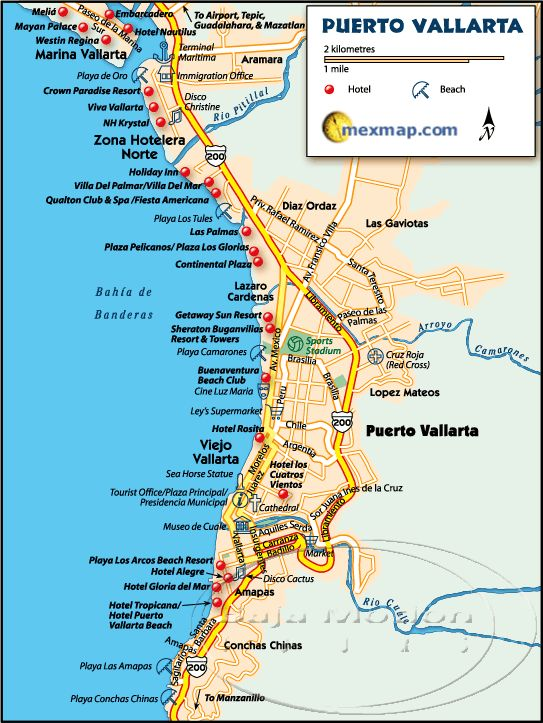
The Puerto Vallarta map depicts the city’s layout and surrounding geographical characteristics, offering helpful information to residents, tourists, and companies. Puerto Vallarta highlights significant , streets, neighborhoods, beaches, parks, and attractions, allowing users to easily navigate the city and explore its many offerings.
The map highlights noteworthy sites, such as the ancient Old Town (Zona Romántica), the popular Malecón boardwalk, the Hotel Zone, Marina Vallarta, and the surrounding hilly terrain and coastline. Puerto Vallarta includes infrastructure such as airports, ports, hospitals, schools, transit hubs, and tourist attractions like museums, galleries, restaurants, and retail malls.
Puerto Vallarta’s maps are available in various formats, including paper maps, digital maps accessible through websites and mobile applications, and interactive maps with configurable features. The maps are helpful for travelers planning their trips, inhabitants navigating their daily lives, and businesses managing their operations.
How big is Puerto Vallarta?
Puerto Vallarta is 1,301 square kilometers and has grown into a bustling city and a popular tourist destination. Puerto Vallarta was originally a modest fishing village on Mexico’s Pacific coast. Puerto Vallarta’s growth is seen in various ways, including urbanization, infrastructure development, and increased tourism.
Puerto Vallarta has grown from a tiny fishing village to a thriving seaside resort. The city’s landscape is transformed by the construction of hotels, resorts, residential neighborhoods, and business establishments. Neighborhoods have grown, and new developments have appeared to meet the growing population and visitor demand. The historic core, the Malecón, has maintained its allure while undergoing redevelopment efforts to attract visitors.
Infrastructure development is critical in accelerating Puerto Vallarta’s expansion. The city invested in transportation infrastructure, including roads, bridges, and the Gustavo Díaz Ordaz International Airport, to improve connectivity and accessibility for residents and tourists.
Puerto Vallarta is dedicated to maintaining its natural beauty and environmental sustainability despite growing urbanization. Efforts are being undertaken to safeguard the region’s pristine beaches, lush jungles, and various ecosystems, ensuring they remain popular tourist destinations while maintaining natural balance.
What is the overall population of Puerto Vallarta?
The overall population of Puerto Vallarta is at 567,694. The figure comprises city dwellers and people from the surrounding metropolitan area, encompassing nearby communities and rural areas. Puerto Vallarta’s population has steadily increased over the years, owing to various factors, including urbanization, economic opportunities, and the city’s popularity as a tourist destination.
Puerto Vallarta began as a modest fishing community in 1851 and has since grown into a dynamic urban center with a diversified population. Puerto Vallarta’s evolution into a thriving city and tourism destination has coincided with significant population increases and demographic shifts. Puerto Vallarta has long attracted residents from all over Mexico and the world, drawn by its natural beauty, temperate climate, and high standard of living.
Puerto Vallarta’s current population of more than half a million people highlights the city’s importance as one of the major municipalities in Jalisco, Mexico. Puerto Vallarta’s growing economy, modern amenities, and rich cultural legacy continue to attract new residents and visitors looking for jobs, pleasure, and relaxation opportunities. The city’s diversified population adds to its vibrant social fabric, with people from all walks of life coexisting peacefully amidst the stunning scenery and active metropolitan atmosphere.
What is the employment rate of Puerto Vallarta?
The employment rate of Puerto Vallarta is 97.8%. Puerto Vallarta has high worker participation, indicating a thriving economy with numerous job opportunities across multiple industries. Individuals actively contributing to the labor force in Puerto Vallarta are considered to be employed, whether they work full-time, part-time, or for themselves.
The high employment rate reflects Puerto Vallarta’s role as a vibrant economic center, with main sectors including tourism, hospitality, real estate, commerce, manufacturing, and services. The city’s well-known position as a significant tourist destination contributes significantly to employment levels, with several enterprises catering to the requirements of both visitors and inhabitants. Puerto Vallarta’s tourism industry, which includes hotels, restaurants, tour operators, and retail outlets, offers several job prospects for the local people.
The diversification of Puerto Vallarta’s economy guarantees several employment opportunities outside the tourism industry. The real estate business, driven by local and foreign demand for properties, provides job offerings in construction, property management, sales, and related services. The city’s commercial sector is thriving, with retail shops, enterprises, and entrepreneurial projects adding to employment creation and economic growth.
What is the unemployment rate of Puerto Vallarta?
The unemployment rate of Puerto Vallarta is 3.2%. The number represents the share of the city’s labor force currently unemployed but actively looking for jobs. A key economic indicator, unemployment measures how well the labor market is doing and how many job offerings are there in a certain area. A low unemployment rate in Puerto Vallarta indicates a very strong work market with plenty of options for job searchers.
Puerto Vallarta’s economy is broad, with main areas including tourism, hospitality, commerce, and services creating job opportunities. The city’s stunning beaches, colorful culture, and pleasant temperature draw millions of tourists yearly, fueling a thriving tourism business that creates jobs in various areas, including lodging, food services, and entertainment.
The comparatively low unemployment rate of 3.2% demonstrates Puerto Vallarta’s economic resilience in the face of external pressures such as global economic downturns or natural disasters. The figure demonstrates the city’s ability to offer jobs for its citizens while maintaining economic stability, which contributes to its reputation as a desirable place to live, work, and visit.
A low unemployment rate indicates a robust job market, but staying alert and addressing any underlying problems that limit one’s ability to find work. Differences in job quality and impediments to workforce participation all impact the labor force’s well-being. Continuous monitoring and proactive efforts by policymakers, businesses, and community stakeholders are essential for guaranteeing equal job opportunities and long-term economic growth in Puerto Vallarta.
What are the sources of income in Puerto Vallarta?
The sources of income in Puerto Vallarta are varied and dynamic, with tourism serving as the primary driver of economic activity. Tourism is the key driver, employing roughly 80% of the local workforce. The city’s picturesque beaches, water activities, sportfishing options, and golf courses draw visitors worldwide, boosting various hospitality enterprises such as hotels, restaurants, personal services, and transportation.
Puerto Vallarta’s economy is traditionally influenced by agriculture. Banana plantations were formerly a pillar of the city’s agricultural economy, helping to drive rapid population expansion despite threats like storms and floods. Agriculture is a component of the city’s economic fabric, albeit to a lesser extent, while its importance has declined over time.
Manufacturing activities add to Puerto Vallarta’s income sources, with various sectors producing textiles, processed foods, furniture, and other items. The industry creates work opportunities and contributes to economic diversity in the city, thereby sustaining local employment and promoting economic growth. The manufacturing ventures enhance Puerto Vallarta job opportunities, providing residents with different employment options across different sectors of the economy.
The healthcare services industry in Puerto Vallarta, enabled by organizations such as HealthCare Resources Puerto Vallarta, is critical to guaranteeing the well-being of residents and visitors. Comprehensive health services benefit the city’s economy by creating job opportunities and attracting medical tourists seeking high-quality healthcare services.
Real estate and investment activities help to boost Puerto Vallarta’s economy. Property types, including condos, villas, and single-family houses, are available for investment. Domestic and international investors are attracted to the city’s excellent beachfront location and rental income opportunities, boosting the real estate market.
What is the main source of resources in Puerto Vallarta?
The main source of resources in Puerto Vallarta is tourism. Tourism is the key economic engine propelling Puerto Vallarta’s economy. Millions of tourists worldwide go to the city every year, drawn by its breathtaking coastal scenery, rich cultural legacy, and energetic vibe. Tourism revenue is created through various activities such as lodging, dining, entertainment, excursions, and leisure pursuits. Puerto Vallarta’s popularity as a tourist destination has resulted in major expenditures in tourism infrastructure, such as hotels, resorts, restaurants, and recreational facilities, all designed to provide guests with unique experiences.
Tourism is the most significant source of revenue in Puerto Vallarta due to the city’s natural beauty and numerous attractions. Puerto Vallarta, with its stunning beaches and lush jungles, attractive cobblestone streets, and ancient landmarks, provides a plethora of experiences for people seeking relaxation, adventure, culture, and entertainment. The city’s mild temperature, friendly residents, and dynamic cultural scene contribute to its popularity as a top tourist destination in Mexico.
Tourism is an important driver of employment, company growth, and overall economic development in Puerto Vallarta. A sizable section of the local populace depends on it for their livelihoods, and it supports jobs in various industries, including retail, entertainment, hospitality, and transportation. Tourism revenue contributes to the funding of public services, infrastructure improvements, and community development programs, which benefit both locals and visitors.
How does Puerto Vallarta maintain its economy?
Puerto Vallarta maintains its economy through a multifaceted approach involving various sectors and stakeholders. Tourism is the principal driver of economic activity in the city. Puerto Vallarta’s economy primarily relies on tourism, with approximately 80% of the local workforce employed in hospitality, restaurants, and transportation. Tourism revenue maintains enterprises and offers job opportunities for citizens, supporting livelihoods and promoting economic progress.
Agriculture continuously contributes to Puerto Vallarta’s economy, although to a smaller extent than in the past. Banana plantations have historically played an important role in the city’s economic development, and while the agricultural sector has evolved, it continues to support local livelihoods and food production. Manufacturing operations help to strengthen the economy by creating apparel, processed foods, and furniture, which creates jobs and promotes economic diversification.
The healthcare industry helps the city’s economic stability because it ensures the health of residents and visitors. Access to great healthcare promotes a healthy workforce and helps Puerto Vallarta maintain its status as a desirable destination for retirees and medical tourists seeking medical services and wellness programs.
Real estate and investment opportunities are important in supporting Puerto Vallarta’s economy. The city’s excellent beachfront location and vibrant lifestyle entice investors to purchase properties like condos, villas, and vacation rentals. The infusion of investment cash boosts economic activity, creates job opportunities in building and property administration, and adds to the city’s general prosperity.
Government programs, funded by taxes and tourism-related levies, are critical to maintaining Puerto Vallarta’s economic vitality. Investments in infrastructure, public services, and tourism promotion increase the city’s appeal to visitors and investors, while collaboration with private firms fosters economic growth and development.
How much is the daily wage in Puerto Vallarta?
The daily wage in Puerto Vallarta is between MXN $300 and $350, on average, which represents a regular rate across the city’s numerous job categories. The salary level provides a basis for many workers and reflects the region’s economic trends. The salary range serves as a basis for income, but depending on demand, skill level, and experience, certain companies or professions pay more.
Higher pay is available in the hospitality industry, an important aspect of Puerto Vallarta’s economy due to its reliance on tourists. Hotels, restaurants, and tour firms provide competitive salaries to recruit and keep experienced employees. Hotel employees, restaurant servers, and tour guides earn greater earnings than other industries, reflecting the city’s reliance on tourism-related services.
Skilled labor occupations in construction, manufacturing, and specialized services pay more than entry-level ones. Workers with competence in carpentry, plumbing, electrical work, or specialized trades earn higher compensation than the average, reflecting the demand for their abilities and the value they add to their industry.
The daily wage range in Puerto Vallarta is a starting point for many workers, and consider any additional bonuses or perks that come with employment. Some firms provide amenities such as meals, water, transportation assistance, or paid time off, which improves employees’ entire compensation package. For example, providing food, water, or transportation support helps employees reduce their daily living expenses, improving their financial well-being.
What is the cost of living in Puerto Vallarta?
The cost of living in Puerto Vallarta is MEX $40,674. The figure encompasses various expenses, including accommodation, food, transportation, utilities, healthcare, and entertainment. Housing expenditures are a considerable component of Puerto Vallarta inhabitants’ monthly budgets. Rent prices vary depending on the property’s location, size, and amenities. Residential regions located further from the city center offer more economic opportunities, even though rental prices are higher in popular tourist destinations or neighborhoods with seaside properties.
Food prices in Puerto Vallarta add to the overall cost of living. Cooking at home is less expensive than eating out, and dining at restaurants or cafés is still fun. Local markets and grocery stores provide various low-cost options for grocery shopping and home cooking, which help with food budgeting.
Transportation expenditures vary depending on whether one owns a car or uses public transportation. Owning a car incurs costs such as fuel, insurance, maintenance, and parking fees, whereas public transportation choices such as buses or taxis are more economical ways to get around the city. Transportation costs are a major factor in budgeting and lifestyle choices for locals and visitors when evaluating the total cost of living in Puerto Vallarta.
Utilities such as electricity, water, and internet access contribute to the expense of living in Puerto Vallarta. Maintaining a reasonable quality of life requires planning for utility expenditures, which vary according to provider and usage.
Healthcare prices are another problem for Puerto Vallarta inhabitants. Certain people prefer to use private healthcare facilities or obtain health insurance, which is more expensive, while public healthcare services are available.
Entertainment and recreational activities increase the overall cost of living in Puerto Vallarta. Some activities require additional fees for tickets, equipment rentals, or membership. The city provides various outdoor activities, cultural events, and leisure pursuits, however, fees for tickets, memberships, or rental equipment apply to engage in such activities.
How much does a day cost in Puerto Vallarta?
The daily cost in Puerto Vallarta varies depending on the preferences and spending habits of locals, foreigners, and tourists. Budget travelers, whether locals or foreigners, usually try to spend around $46 per day. The price includes lodging in hostels or cheap hotels and meals at affordable restaurants across the city. Budget-conscious travelers select free or low-cost activities and attractions to save money while still enjoying the city’s offers.
Averaging about $114 (M$1,908) daily is for people on a little greater budget. The mid-range spending plan enables additional meals at eateries that accommodate a range of price points and lodging at mid-range motels or vacation rentals. The budget allows for more freedom concerning entertainment and activities, allowing travelers to try out various opportunities without going overboard.
Luxury travelers are expected to spend approximately $279 each day. The larger budget allows for stays at luxury hotels or resorts, meals at upmarket restaurants, and participation in premium tours and activities. Luxury guests emphasize comfort, convenience, and premium experiences, and they budget appropriately to ensure a wonderful stay in Puerto Vallarta.
What businesses can you do in Puerto Vallarta?
The businesses you can do in Puerto Vallarta are diverse, offering plenty of opportunities across various industries. Puerto Vallarta’s flourishing economy and diverse demographic landscape provide numerous business prospects. The hospitality industry is the most popular business venture because of its reputation as a top tourist destination. Hotels, resorts, vacation rentals, restaurants, and bars are pillars of the local economy, meeting the wants and wishes of the city’s guests. Tourism and hospitality industries thrive in Puerto Vallarta’s dynamic atmosphere, offering everything from exquisite accommodations to enticing culinary experiences and a vibrant nightlife.
The real estate sector offers significant opportunities for Puerto Vallarta enterprises. There is a regular inflow of visitors and expatriates looking for second homes or retirement properties, creating a need for real estate services such as property sales, rents, and management. The appeal of owning a piece of paradise in Puerto Vallarta draws investors and purchasers, fueling growth in the real estate market and generating chances for businesses to flourish.
There are plenty of opportunities for entrepreneurial success in Puerto Vallarta outside the tourism and real estate sectors. Retail and boutique stores that sell locally manufactured crafts, apparel, and souvenirs appeal to tourists and locals looking for distinctive and authentic items. Wellness and spa services use the city’s calm atmosphere, providing relaxation and rejuvenation experiences in stunning natural settings.
Adventure and eco-tourism companies take advantage of Puerto Vallarta’s vast biodiversity and stunning landscapes, offering outdoor enthusiasts exhilarating activities, including hiking, zip-lining, snorkeling, and eco-tours. Language schools and educational services provide language training and cultural experiences to the rising expatriate community and visitors who want to immerse themselves in local culture.
How do Businesses affect the economy of Puerto Vallarta?
Businesses affect the economy of Puerto Vallarta in many ways, serving as essential drivers of growth, development, and prosperity within the community. Businesses contribute to various aspects of economic development, fostering growth, stability, and prosperity within the community through their operations and activities.
The tourist and hospitality sector is at the center of Puerto Vallarta’s economy, and it includes several enterprises serving travelers worldwide. Hotels, resorts, restaurants, tour operators, and recreational facilities comprise the city’s tourism industry, luring visitors with the promise of sun-kissed beaches, colorful cultural experiences, and many leisure activities. Tourism firms provide money that drives economic growth and supports livelihoods by offering job opportunities in various industries. The potential for Puerto Vallarta real estate investment remains an attractive option for investors seeking to capitalize on the city’s thriving tourism sector and growing demand for residential and commercial properties in the desirable coastal destination.
Businesses are important in encouraging investment and innovation expanding and diversifying Puerto Vallarta’s economy. Businesses, ranging from small to large corporations, contribute to the city’s economic dynamism through capital investments, R&D projects, and entrepreneurial ventures. The investments boost productivity, increase competitiveness, and make the city more appealing as a business and investment destination.
The real estate industry contributes significantly to Puerto Vallarta’s economy, fuelled by demand from domestic and international buyers looking for houses in the seaside paradise. Real estate enterprises, such as developers, agents, and property management corporations, stimulate economic activity through property transfers, construction projects, and urban development efforts. The purchase, sale, and rental of residential and commercial properties generate cash, support job development, and improve the city’s urban landscape and infrastructure.
Businesses are revenue generators for Puerto Vallarta’s municipal government, contributing taxes, fees, and licensing earnings to pay for important public services and infrastructure. Business tax revenues help to fund improvements in education, healthcare, transportation, public safety, and environmental conservation, improving the overall quality of life for inhabitants and visitors.
How does Real Estate Investment affect Puerto Vallarta?
Real estate investment affects Puerto Vallarta profoundly, influencing its economic dynamics and social fabric significantly. The influence is most visible in capital injection into the local economy, as real estate transactions, construction projects, and property-related services promote economic activity. The city’s economy grows and prospers because developers, investors, and homeowners contribute to producing jobs, income, and tax revenues.
Puerto Vallarta’s thriving tourism and hospitality industries rely heavily on real estate investment. The availability of various lodging options, including condominiums, villas, and holiday rentals, meets the needs of tourists seeking temporary dwellings. The properties improve the city’s appeal as a tourist destination and increase expenditure on tourism-related activities such as dining, shopping, and recreation. Successful property rentals help the economy by giving homeowners additional revenue while supporting local businesses and services.
Real estate investment has an economic influence and facilitates Puerto Vallarta’s infrastructural and urban development. The city is experiencing great upheaval as developers embark on new projects to meet demand for housing, commercial space, and services. Residential communities, shopping centers, recreational facilities, and transportation infrastructure contribute to the city’s livability, connectivity, and overall quality of life for residents and visitors. The constant development improves the urban landscape and instills a sense of prosperity and richness in the community.
The Puerto Vallarta real estate market attracts international investors and expatriates drawn to the city’s pleasant temperature, natural beauty, and relatively low property prices. Non-Mexican nationals legally own property in Puerto Vallarta through a fideicomiso trust, which allows them to purchase and hold real estate in specific coastal areas. The infusion of international investment diversifies the real estate market and promotes cultural interaction by integrating expats into the local community and contributing to its social and economic vitality.
Is Puerto Vallarta an ideal place for Real Estate Investment?
Yes, Puerto Vallarta is an ideal place for real estate investment. The city has several qualities that make it appealing to investors, including breathtaking natural beauty, a strong tourism industry, a pleasant temperature, and comparatively low property prices compared to other international destinations. Puerto Vallarta’s increasing economy, infrastructure development, and favorable legal environment for foreign ownership make it a profitable real estate market.
The city’s popularity as a tourist destination provides a consistent demand for holiday rentals, condominiums, and second homes, providing investors with various rental income and capital gain prospects. The availability of several lodging options, including luxury resorts, boutique hotels, and vacation rentals, appeals to the preferences of domestic and international travelers, increasing the rental market’s appeal.
Puerto Vallarta’s location on Mexico’s Pacific coast is a gateway to the region, attracting people from North America, Europe, and elsewhere. The accessibility via air, sea, and land transportation networks makes it appealing to tourists and investors, allowing for leisure and business travel.
Puerto Vallarta’s favorable regulatory environment, which includes unambiguous property rights and legal channels for foreign ownership via fideicomiso arrangements, gives investors confidence and security when investing in real estate. Continuous urban development initiatives, infrastructure projects, and improvements in public services add to the city’s overall appeal as a real estate investment destination.
What is the Crime Rate of Puerto Vallarta over the year?
The crime rate of Puerto Vallarta over the ear is 35.23. The city provides a safe atmosphere for both residents and visitors despite the odd incident. The most common infraction in Puerto Vallarta is public intoxication, which largely affects individuals participating in nighttime activities. Serious crimes such as residential burglary and auto theft do occur.
Residential burglary is among the most common major crimes in Puerto Vallarta, causing alarm among homeowners and residents. Auto theft follows closely behind, highlighting vehicle owners’ difficulties in protecting their assets. Carjackings are fortunately infrequent, thanks in part to law enforcement’s rapid reaction skills, which allow them to regulate traffic flow and respond to situations quickly successfully. The statistics contribute to the overall understanding of the Puerto Vallarta crime rate, reflecting the challenges faced by the community and the effectiveness of law enforcement efforts in addressing criminal activity.
Police maps show that most significant crimes occur outside tourist regions, emphasizing the significance of situational awareness and prudence while venturing into less visited sections of the city. Visitors must be watchful and take the required precautions to reduce dangers.
Tour guides indicate that the most common crimes tourists report are tiny thefts due to failures in attention or security. Common instances include opportunistic thefts caused by lost personal items or unattended backpacks. The occurrences highlight the significance of being cautious and implementing good security behaviors, such as keeping valuables secure and alerting one’s surroundings.
Is Puerto Vallarta a secure place to live?
Yes, Puerto Vallarta is a secure place to live. Puerto Vallarta is usually regarded as a secure location to live, with people enjoying a comparatively safe atmosphere in comparison to many other Mexican towns. Puerto Vallarta has a lower crime rate than other famous tourist spots. The city’s dedication to safety is reflected in various projects to improve security for inhabitants and visitors.
The presence of law enforcement units that actively patrol the streets and tourist areas contributes significantly to Puerto Vallarta’s reputation for safety. Police presence is undeniable in high-traffic areas, serving as a conspicuous deterrent to criminal conduct while assuring rapid responses to any events that emerge. The city has launched innovative programs such as “Safe Tourism,” which aim to improve visitor safety and enjoyment.
Puerto Vallarta has a strong sense of community and neighborly solidarity, with locals looking out for one other and actively participating in neighborhood watch programs. The collaborative effort promotes a sense of community and helps to create a safer living environment. The city’s economy strongly relies on tourism, so officials and stakeholders must work together to maintain a positive reputation for safety.
Puerto Vallarta provides several residential options, including gated communities, condominium complexes, and historic districts. Many developments have private security features such as gated entrances, security guards, and monitoring systems, giving residents extra protection and peace of mind.