
Riviera Nayarit is considered safe for tourism and residential living when standard precautions are followed. Riviera Nayarit safety varies by municipality, neighborhood, and time of day. Official agencies record crime in Riviera Nayarit by state and municipality rather than as a single tourism region. The Riviera Nayarit crime rate refers to reported criminal activity affecting communities along Nayarit’s Pacific coast. Riviera Nayarit is a tourism region rather than an official municipality, so no government agency publishes a crime rate for the destination as a whole. Official data come from jurisdictions (for instance, Bahía de Banderas, Compostela, San Blas, or Nayarit state).
Riviera Nayarit’s crime history is measured through Nayarit state and municipal records. SESNSP maintains historical crime data that tracks reported offenses across different years. Crime levels and safety perceptions change over time, so current local records provide the strongest basis for evaluating risk. Riviera Nayarit runs along the Pacific coast of Nayarit, Mexico. The tourism corridor begins near Banderas Bay and extends north for roughly 190 to 200 miles. Major destinations include Nuevo Nayarit, Bucerías, Punta de Mita, Sayulita, Rincón de Guayabitos, Chacala, and San Blas.
Map of Riviera Nayarit
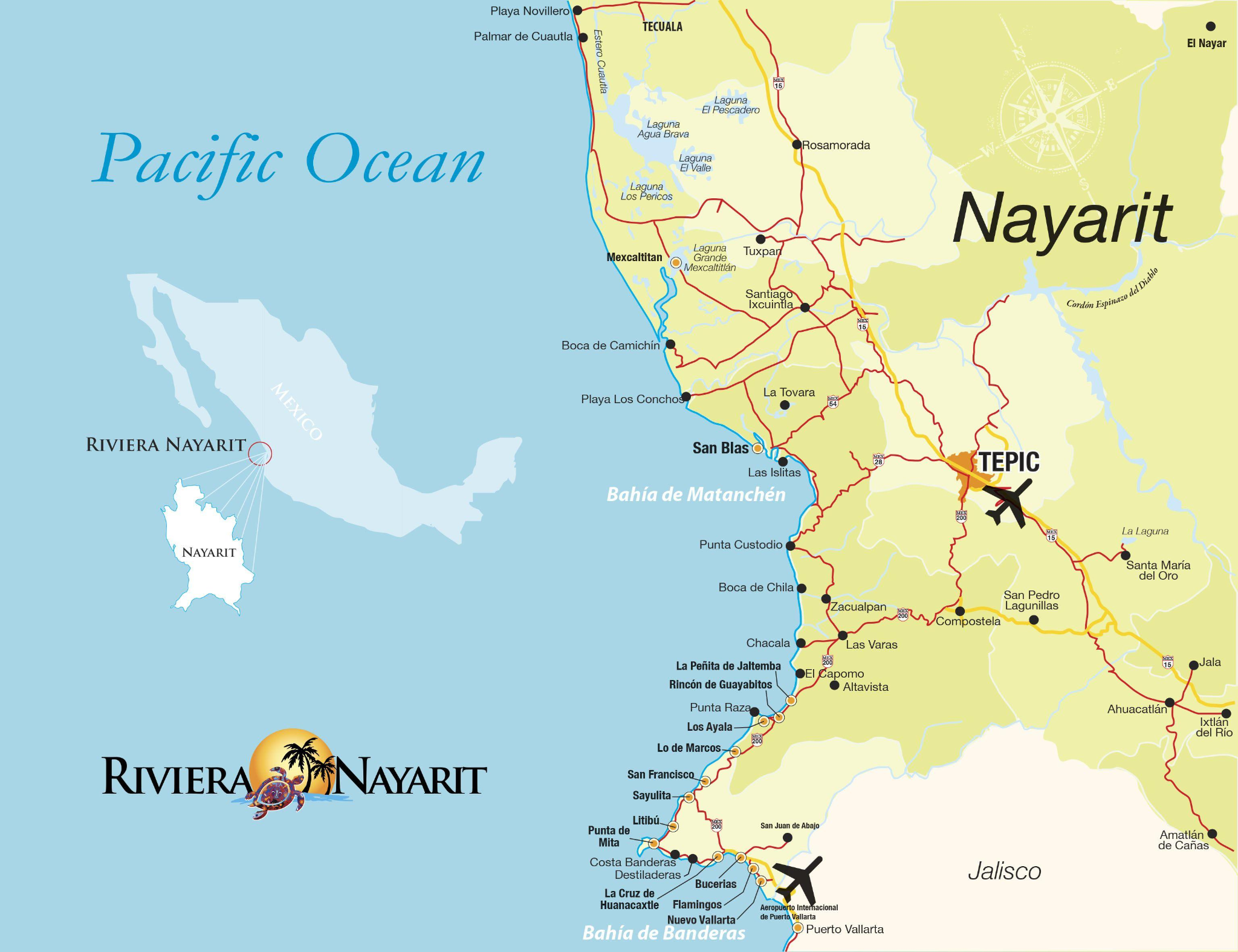
Riviera Nayarit does not have one official coordinate because the region covers a long section of coastline. A useful southern reference point is approximately 20.7° N, 105.3° W, near Bahía de Banderas. Northern destinations extend farther up the Nayarit coast. Riviera Nayarit does not have one official population total because the tourism region crosses several municipalities. Nayarit recorded 1,235,456 residents in the 2020 Census, while Bahía de Banderas recorded 187,632 residents. Population figures should be checked by the municipality when evaluating a specific neighborhood or property.
What is the Crime Rate of Riviera Nayarit?
Riviera Nayarit does not have one official crime rate because Mexican authorities publish crime data by state and municipality rather than for the Riviera Nayarit tourism region as a single statistical area. The latest official SESNSP data available in August 2026 covers January through June 2026 and provides statewide figures for Nayarit.
Property crime, assault related offenses, vehicle theft, sexual offenses, and homicide remain part of the reported crime profile, while incidence differs substantially between municipalities and communities. Travelers and residents get a more accurate safety picture by reviewing data for Bahía de Banderas, Compostela, San Blas, or another municipality associated with a specific Riviera Nayarit destination, rather than relying on a single regional percentage.
Crime statistics show that property crime, assault related offenses, vehicle theft, sexual offenses, and homicide form part of Nayarit’s recorded crime profile. ENVIPE 2025 measures victimization during 2024 at the state level and covers offenses (for instance, burglary, robbery, vehicle theft, physical injury, sexual offenses, kidnapping, and homicide). Riviera Nayarit crime levels vary between coastal communities, so municipal crime records provide a more accurate assessment than one regional percentage. SESNSP historical reports allow residents, travelers, and property buyers to compare crime trends over time.
How Safe is Riviera Nayarit?
Riviera Nayarit is generally safe for tourists and residents in established coastal communities, but normal security precautions remain necessary. The U.S. State Department currently places Nayarit at Level 2: Exercise Increased Caution due to crime and terrorism risks, and no specific travel restrictions apply to U.S. government employees within the state.
Tourist areas generally provide a stronger sense of safety because resorts, commercial districts, beaches, and main roads receive regular security attention. Nuevo Nayarit, Bucerías, Punta de Mita, and Sayulita contain established tourism infrastructure, active businesses, and residential communities. Neighborhood conditions still vary, so residents and visitors should compare local crime reports, street lighting, access controls, and nighttime activity before choosing an area.
Police visibility increases around major tourism zones and during busy travel periods. Nayarit authorities deploy Public Security, Civil Protection, firefighters, tourism officials, and other agencies during seasonal operations, while tourism security programs focus on visitor assistance and public safety. Residents and travelers must still avoid isolated streets or beaches after dark, secure valuables, and use reliable transportation when moving between communities.
Are there Cartel Shootings in Riviera Nayarit?
Yes, cartel related violence can occur in Nayarit, but cartel shootings are not a routine occurrence across Riviera Nayarit’s established tourist communities. The current U.S. State Department advisory states that Nayarit faces a risk of violence from cartels, gangs, criminal organizations, and designated terrorist groups, while U.S. government employees have no specific travel restrictions within the state.
Recent shootings in Riviera Nayarit have not always been confirmed as cartel related. A March 11, 2026, shooting in San Pancho, Bahía de Banderas, injured environmental advocate Erik Saracho Aguilar, but published reporting connected the attack to threats surrounding environmental and development disputes rather than establishing a cartel motive. Travelers should therefore avoid assuming that every shooting or violent incident in Riviera Nayarit involves organized crime. Cartel violence remains a legitimate regional security concern, yet available evidence does not support describing shootings as common in resort communities (for instance, Nuevo Nayarit, Bucerías, Sayulita, and Punta de Mita).
What are Riviera Nayarit’s emergency phone numbers?
Riviera Nayarit’s emergency phone numbers are listed below.
- Emergency, Police, Ambulance, and Fire: 911. Mexico’s national emergency number operates 24 hours a day, 365 days a year. Nayarit’s C5 center routes emergency calls to police, Red Cross ambulance services, Civil Protection, firefighters, military units, and other appropriate agencies. Travelers must use 911 first for any immediate threat to life, health, or property rather than calling an administrative office. Riviera Nayarit extends beyond Bahía de Banderas, so local department numbers differ in northern municipalities.
- Anonymous Crime Reporting: 089. Nayarit’s state security system lists 089 for confidential citizen crime reports that do not require an immediate emergency response.
- Bahía de Banderas Public Security Department: (329) 291 1896. The municipal tourism office lists the Dirección de Seguridad Pública number for police related assistance within Bahía de Banderas.
- Traffic Police and Transit Department: (329) 291 1870, Ext. 350. Bahía de Banderas operates traffic and road enforcement through its Dirección de Seguridad Ciudadana y Tránsito Municipal.
- Bahía de Banderas City Hall: (329) 291 1870. The municipal government lists the main City Hall switchboard for government services and department referrals.
- Fire Department and Civil Protection: 911 for emergencies. Bahía de Banderas Civil Protection and Fire Department services respond through the national emergency system. The municipal directory lists (329) 291 1870 as the government contact line for Protección Civil y Bomberos.
What are the residents of Riviera Nayarit’s security and safety concerns?
Residents of Riviera Nayarit generally focus on property crime, personal safety, road security, emergency response, and the possibility of organized crime activity affecting nearby communities. Nayarit remains under a U.S. State Department Level 2 advisory, which calls for increased caution because of crime and terrorism concerns. The advisory does not impose specific travel restrictions on U.S. government employees within Nayarit.
The residents of Riviera Nayarit’s Security and Safety Concerns in Riviera Nayarit are listed below.
- Property crime: Residents remain concerned about burglary, theft, vehicle theft, and property damage. Residential communities commonly use secure parking, cameras, controlled entrances, alarms, and neighborhood patrols to reduce exposure.
- Personal safety: Residents consider robbery, assault, sexual violence, and nighttime security when traveling between communities. Well traveled streets and reliable transportation reduce risk compared with isolated roads, remote beaches, or poorly lit areas.
- Organized crime: Cartel activity remains a regional concern because criminal groups operate across western Mexico. Major security incidents can disrupt highways, businesses, transportation, and daily routines, even when tourist districts are not the main target.
- Road and traffic safety: Residents face risks connected with traffic accidents, impaired driving, congestion, and unfamiliar road conditions. Municipal police and traffic departments maintain patrols and road enforcement across Bahía de Banderas.
- Emergency response: Residents rely on police, firefighters, Civil Protection, ambulance services, and municipal authorities during medical emergencies, fires, severe weather, and public safety incidents.
Nayarit and Bahía de Banderas authorities use police patrols, crime prevention programs, traffic enforcement, coordinated security operations, and tourism focused policing. Bahía de Banderas has expanded its surveillance and preventive policing programs to strengthen security and improve contact between officers and local communities. The Municipal Public Security and Traffic departments provide operational and administrative services throughout Bahía de Banderas. State and municipal agencies increase security deployments during major vacation periods and coordinate with federal authorities when broader threats emerge.
Recent articles highlight several security concerns in Riviera Nayarit. El País reported the March 2026 shooting of environmental advocate Erik Saracho Aguilar in San Pancho and later covered concerns about the police response and risks faced by environmental advocates. Hotel Investment Today reported that wider cartel violence disrupted Riviera Nayarit destinations during February 2026. El País later covered a Punta de Mita development dispute involving residents, fishermen, environmental advocates, and authorities. Recent coverage shows that security concerns in Riviera Nayarit involve violent crime, organized crime, emergency response, land disputes, and public safety enforcement.
When can Riviera Nayarit be Dangerous?
Riviera Nayarit can be dangerous at night, in isolated areas, during heavy drinking, and when travelers use unfamiliar transportation or visit locations away from established tourist zones. Nayarit currently carries a U.S. State Department Level 2 advisory, which recommends increased caution because of crime and security concerns. Solo tourists face greater exposure when walking alone after dark or traveling through remote areas without reliable transportation. Female travelers face additional concerns because Canadian travel guidance reports harassment, verbal abuse, physical assault, and sexual assault involving women traveling alone in Mexico.
Families with children should maintain close supervision near beaches, crowded attractions, pools, streets, and transportation areas where separation or accidents create additional risk. Travelers can reduce exposure by staying in established tourist areas, avoiding poorly lit streets and isolated beaches at night, using registered transportation, securing valuables, limiting alcohol consumption, and checking current government travel advisories before visiting unfamiliar parts of Riviera Nayarit.
What are the Most Common Crimes Committed in Riviera Nayarit?
The most commonly reported crime categories relevant to Riviera Nayarit include theft, assault, robbery, car theft, burglary, rape, and homicide. Official Mexican crime databases do not publish a combined crime rate for the Riviera Nayarit tourism region. Government records instead report offenses by state and municipality, so statewide Nayarit figures provide a broader context while municipal records provide a more precise assessment for a specific community. Mexico’s national public security system publishes official crime data from investigation files opened by state prosecutors.
The most common crimes committed in Riviera Nayarit are listed below.
- Rape: Rape involves sexual intercourse carried out through physical or psychological violence without valid consent. Nayarit recorded 45 simple rape investigations during January through March 2026, making the offense less frequently reported than theft or intentional injury during the same period.
- Burglary: Burglary corresponds most closely to residential theft (robo a casa habitación) in Mexican crime statistics. Nayarit recorded 32 residential theft investigations during Q1 2026, comprising 30 nonviolent cases and 2 violent cases.
- Homicide: Homicide refers to causing the death of another person and covers intentional and negligent cases. Nayarit recorded 39 homicide investigations during Q1 2026, consisting of 12 intentional homicides and 27 negligent homicides.
- Robbery: Robbery involves unlawfully taking property, with violent robbery involving physical force or threats. Official Nayarit records show property robbery as a recurring offense, with cases covering homes, businesses, vehicles, motorcycles, and other property.
- Assault: Assault corresponds most closely to intentional injury (lesiones dolosas) in Nayarit crime statistics. Nayarit recorded 161 intentional injury investigations during Q1 2026, making assault considerably more frequent than homicide, rape, or residential burglary during the same period.
- Car Theft: Car theft involves taking a motor vehicle without the lawful owner’s consent. Nayarit recorded 109 motor vehicle theft investigations during Q1 2026, consisting of 93 four-wheel vehicle thefts and 16 motorcycle thefts.
- Theft: Theft involves taking another owner’s property without legal authorization or consent. Property theft was among the most frequently reported crime categories in Nayarit during Q1 2026. Residents and tourists face greater exposure to property crime than to serious violent offenses based on reported investigation totals.
Riviera Nayarit cannot accurately be classified as a uniformly high crime area from available government statistics. Official crime data covers the entire state of Nayarit rather than Riviera Nayarit as a separate tourism region. The current U.S. State Department advisory places Nayarit at Level 2: Exercise Increased Caution because of crime and security risks, while U.S. government employees face no specific travel restrictions within the state. Property offenses occur more frequently than serious violent crimes in the Q1 2026 statewide figures, so travelers and residents should protect valuables, secure vehicles and accommodations, use trusted transportation, and remain alert in unfamiliar areas
1. Rape
| Category | Details |
| Definition | Rape under Nayarit law involves sexual intercourse obtained through physical or psychological violence without valid consent. Nayarit criminal law treats rape and equivalent rape as separate sexual offenses. |
| Crime Rate | Simple rape represented about 1.8% of the 2,507 criminal investigation files recorded across Nayarit from January through March 2026. The percentage uses statewide Nayarit data because official authorities do not publish a separate Riviera Nayarit rape rate in the quarterly report. |
| Statistics | Nayarit recorded 45 simple rape cases during the first quarter of 2026. The official crime report covers January, February, and March and identifies the figures as preliminary data through March 31, 2026. |
| Penalty | Rape carries a prison term of 15 to 25 years under the Nayarit Penal Code, with additional penalties applying when legally defined aggravating circumstances are present. The applicable sentence depends on the facts established in the criminal case and the law in force at the time of the offense. |
2. Burglary
| Category | Details |
| Definition | Burglary is represented in Nayarit crime statistics as residential theft (robo a casa habitación), meaning property is taken unlawfully from an occupied or residential property. Nayarit law classifies theft committed inside a dwelling as qualified robbery. |
| Crime Rate | Residential theft accounted for approximately 1.3% of the 2,507 criminal investigation files recorded in Nayarit from January through March 2026. Official reports provide statewide Nayarit data rather than a separate Riviera Nayarit burglary rate. |
| Statistics | Nayarit recorded 32 residential theft cases during Q1 2026, with 6 cases in January, 11 in February, and 15 in March. Authorities classified 2 cases as involving violence and 30 cases as nonviolent. |
| Penalty | Basic theft carries a sentence of 3 months to 13 years in prison, depending on the value of the stolen property. Residential theft qualifies as aggravated theft and adds 1 to 5 years’ imprisonment to the applicable basic sentence. Unauthorized entry into a residence without theft is a separate offense, punishable by 6 months to 2 years in prison plus a fine. |
3. Homicide
| Category | Details |
| Definition | Homicide means causing the death of another person. Nayarit crime statistics separate homicide into intentional homicide (homicidio doloso) and negligent homicide (homicidio culposo). |
| Crime Rate | Homicide represented approximately 1.6% of the 2,507 criminal investigation files recorded across Nayarit from January through March 2026. Official records provide statewide Nayarit figures rather than a separate homicide rate for Riviera Nayarit. |
| Statistics | Nayarit recorded 39 homicide investigations during Q1 2026. Authorities classified 12 cases as intentional homicide and 27 cases as negligent homicide. Monthly totals reached 12 cases in January, 18 in February, and 9 in March. |
| Penalty | Simple intentional homicide carries 10 to 20 years in prison and a fine of 15 to 100 days under Article 357 of the Nayarit Penal Code. Qualified homicide carries 20 to 50 years in prison and a fine of 50 to 150 days under Article 359. |
4. Robbery
| Category | Details |
| Definition | Robbery refers to taking another party’s movable property without legal right or consent while using physical force, threats, or another form of violence. Nayarit law classifies robbery committed with physical or psychological violence as qualified robbery. |
| Crime Rate | Nayarit recorded 241 total robbery offenses during January through March 2026, representing about 9.6% of 2,507 criminal investigation files. A calculation from the official violent robbery subcategories produces 43 cases involving violence, equal to about 1.7% of all reported offenses. |
| Statistics | State authorities recorded 78 robberies in January, 66 in February, and 97 in March 2026. Violent cases involved residential property, four wheel vehicles, auto parts, motorcycles, and other robbery classifications. The official figures cover Nayarit rather than Riviera Nayarit as a separate tourism region. |
| Penalty | Basic robbery carries 3 months to 13 years in prison, depending on the value of the property, plus applicable fines. Qualified robbery carries an additional 1 to 5 years in prison when physical or psychological violence or another qualifying circumstance applies. |
5. Assault
| Category | Details |
| Definition | Assault corresponds most closely to intentional injury (lesiones dolosas) in Nayarit crime records. Nayarit law defines an injury as bodily damage or an alteration of health caused by an external act attributable to another party. |
| Crime Rate | Intentional injury represented approximately 6.4% of the 2,507 criminal investigation files recorded across Nayarit from January through March 2026. Official statistics report statewide Nayarit figures rather than a separate assault rate for Riviera Nayarit. |
| Statistics | Nayarit recorded 161 intentional injury cases during Q1 2026, with 42 cases in January, 69 in February, and 50 in March. Reported cases involved firearms, knives, other weapons or objects, and unspecified methods. |
| Penalty | Penalties depend on the severity and lasting effects of the injury. Minor injuries carry 3 months to 2 years in prison, permanent facial scarring carries 2 to 6 years, permanent impairment carries 3 to 10 years, serious permanent loss carries 4 to 12 years, and permanent incapacity or loss of major functions carries 5 to 15 years. Life threatening injuries carry 3 to 8 years, subject to additional applicable penalties. |
6. Car Theft
| Category | Details |
| Definition | Assault corresponds most closely to intentional injury (lesiones dolosas) in Nayarit crime records. Nayarit law defines injury as bodily harm or a health condition caused by an external act attributable to another party. |
| Crime Rate | Intentional injury represented approximately 6.4% of the 2,507 criminal investigation files recorded across Nayarit from January through March 2026. Official statistics provide statewide Nayarit figures rather than a separate assault rate for Riviera Nayarit. |
| Statistics | Nayarit recorded 161 intentional injury cases during Q1 2026, with 42 cases in January, 69 in February, and 50 in March. Reported cases involved firearms, knives, other weapons or objects, and unspecified methods. |
| Penalty | Penalties depend on injury severity and lasting effects. Minor injuries carry 3 months to 2 years in prison. Permanent facial scarring carries 2 to 6 years, permanent impairment carries 3 to 10 years, serious permanent loss carries 4 to 12 years, and permanent incapacity or loss of major functions carries 5 to 15 years. Life threatening injuries carry 3 to 8 years, subject to applicable additional penalties. |
7. Theft
| Category | Details |
| Definition | Theft in Nayarit refers to taking movable property belonging to another owner without legal right or consent. Article 376 of the Nayarit Penal Code defines the offense as robo. |
| Crime Rate | Theft accounted for 241 reported cases, representing about 9.6% of the 2,507 criminal investigation files recorded in Nayarit from January through March 2026. The official report provides statewide Nayarit figures rather than a separate crime rate for the Riviera Nayarit tourism region. |
| Statistics | Nayarit recorded 78 theft cases in January, 66 in February, and 97 in March 2026, producing a first-quarter total of 241 cases. Reported offenses included residential, vehicle, business, livestock, and other property theft. |
| Penalty | Basic theft carries 3 months to 13 years in prison, depending on the value of the stolen property. Applicable fines range from 10 to 200 days. Qualified theft carries an additional 1 to 5 years in prison when aggravating circumstances apply (for instance, violence, residential entry, nighttime activity, or vehicle theft). |
Which Neighborhoods in Riviera Nayarit are the Safest to Live In?
Nuevo Nayarit, Punta de Mita, and Bucerías are among the most established residential areas for families and retirees seeking security, services, and convenient coastal living in Riviera Nayarit. Nuevo Nayarit offers planned communities, condominiums, private developments, marinas, restaurants, golf courses, and extensive tourism infrastructure. Punta de Mita features gated residential developments, luxury villas, resort communities, controlled access, and nearby health care services. Bucerías provides established residential neighborhoods near shops, restaurants, beaches, transportation routes, and essential services.
Nuevo Nayarit, Punta de Mita, and Bucerías are among the most established residential areas for families and retirees seeking security, services, and convenient coastal living in Riviera Nayarit. Nuevo Nayarit offers planned communities, condominiums, private developments, marinas, restaurants, golf courses, and extensive tourism infrastructure. Punta de Mita features gated residential developments, luxury villas, resort communities, controlled access, and nearby health care services. Bucerías provides established residential neighborhoods near shops, restaurants, beaches, transportation routes, and essential services.
Residents must not rely on reputation alone when evaluating a Riviera Nayarit neighborhood or reviewing crime in Riviera Nayarit. Nayarit currently carries a U.S. State Department recommendation to exercise increased caution because of crime, although U.S. government employees face no specific travel restrictions within the state. Families and retirees must review current local crime reports, speak with residents, compare gated communities or properties with controlled entry, and confirm access to police and medical services before choosing a home. Riviera Nayarit lists 911 as the emergency number for police and ambulance emergencies, making proximity to emergency response routes another practical factor when comparing residential areas.
How does Crime Affect Property Values in Riviera Nayarit?
Crime affects property values in Riviera Nayarit by reducing buyer demand, increasing perceived investment risk, and placing downward pressure on prices when security concerns become persistent. Mexican housing research found that higher perceptions of public insecurity are associated with lower housing prices, while proximity to crime hot spots can reduce market values. Buyers searching for Real Estate Investment in Mexico and whether Riviera Nayarit’s safe conditions support a purchase should compare local crime reports, security infrastructure, property sales history, rental demand, and access to police or emergency services before investing.
Reliable public data does not identify specific Riviera Nayarit neighborhoods that have recorded property value declines directly caused by crime. Current market evidence instead shows continued appreciation or investment demand in several coastal communities. Nuevo Vallarta market data reports positive price growth, while Sayulita continues to attract demand connected with tourism and vacation rentals. Bucerías has experienced slower sales and longer listing periods, but available market reports link the slowdown to high inventory rather than crime. Investors and homebuyers should therefore avoid attributing a price decline to crime without neighborhood-level crime records and transaction data that demonstrate a direct relationship.
Does the Crime Rate in Riviera Nayarit Affect the Buying of Properties?
Yes, the crime rate in Riviera Nayarit affects property buying decisions because buyers consider neighborhood security when evaluating property value, rental potential, and long term investment risk. Research on the Mexican housing market found that stronger perceptions of public insecurity are associated with lower housing prices, which shows a measurable connection between security concerns and residential property values. Buyers comparing Riviera Nayarit homes or Riviera Nayarit Properties for Sale must review recent crime reports, local security conditions, property price trends, access to police services, and neighborhood activity before purchasing. INEGI crime surveys provide official data on crime prevalence, victimization, and perceptions of insecurity across Mexico, giving buyers a reliable starting point for assessing local risk. Riviera Nayarit does not have a single official crime rate covering every coastal community, so buyers must review data for the specific municipality and neighborhood associated with the property.
What Safety Measures can you Take to Protect yourself and your Property in Riviera Nayarit?
The safety measures you can take to protect yourself and your property in Riviera Nayarit are listed below.
- Install a security system: Use alarms, exterior cameras, motion sensors, secure locks, and monitored entry points to deter unauthorized access and document suspicious activity.
- Choose a gated community: Gated developments provide controlled vehicle access, staffed entrances, perimeter barriers, and organized security procedures that reduce unrestricted entry.
- Use private security services: Licensed security providers can patrol residential properties, monitor entrances, respond to alarms, and supervise vacant homes during extended absences.
- Secure doors and windows: Reinforced locks, window latches, security screens, and exterior lighting make residential entry more difficult.
- Protect valuables: Keep passports, cash, jewelry, electronics, and property documents in a secure safe rather than visible areas.
- Avoid isolated areas at night: Travelers and residents should use busy streets, established commercial zones, and well-lit routes after dark rather than remote beaches, quiet roads, or poorly lit neighborhoods.
- Stay aware of surroundings: Watch nearby activity, keep phones and valuables secure, and avoid distractions when walking through unfamiliar areas.
- Use trusted transportation: Hotel transportation, registered taxis, and reputable ride services provide safer travel options than accepting rides from unknown drivers.
- Limit visible signs of wealth: Expensive jewelry, large amounts of cash, and unattended electronics can attract unwanted attention in crowded tourism areas.
- Maintain emergency contacts: Save local police, medical services, property management, building security, and trusted transportation contacts for faster assistance during an emergency.
Is it safe to live in Riviera Nayarit?
Yes, it is safe to live in Riviera Nayarit. Riviera Nayarit is generally safe for residents who choose established communities and follow practical security precautions. The U.S. State Department currently places Nayarit at Level 2: Exercise Increased Caution due to crime and security risks, and no specific travel restrictions apply to U.S. government employees in Nayarit. Canadian travel guidance recommends a high degree of caution throughout Mexico because criminal activity and kidnapping remain concerns.
Residents must choose properties with secure locks, exterior lighting, controlled access, alarms, cameras, or community security when available. Daily routines should favor well-traveled streets, established commercial areas, and reliable transportation after dark. Residents must avoid isolated beaches, poorly lit roads, and unfamiliar neighborhoods at night. Valuables must remain out of sight inside homes and vehicles. Emergency numbers, nearby hospitals, local police stations, property managers, and trusted transportation contacts must remain easy to access. Emergency assistance in Mexico is available through 911.
Are Hotels and Resorts in Riviera Nayarit Safe?
Yes, hotels and resorts in Riviera Nayarit are generally safe when guests stay at established properties and follow standard security precautions. Nayarit currently carries a Level 2 advisory from the U.S. State Department, which calls for increased caution because of crime, while no specific travel restrictions apply to U.S. government employees within Nayarit. Hotels and resorts commonly provide controlled entrances, security staff, reception services, room safes, and monitored common areas, but guests still need to protect valuables and remain alert outside resort grounds. Travelers must use hotel transportation, registered taxis, or reputable ride services and avoid isolated streets or beaches after dark. Canadian travel guidance recommends a high degree of caution throughout Mexico because criminal activity and kidnapping remain security concerns.
Guests must lock hotel rooms and balcony doors, store passports and valuables in a room safe, avoid displaying expensive jewelry or large amounts of cash, and confirm visitor identities before opening the door. Travelers must keep drinks under personal supervision, use established transportation providers, and avoid walking alone through poorly lit or unfamiliar areas late at night. Guests must learn the location of emergency exits, save the hotel’s security contact number, and keep emergency assistance information accessible. Travelers must check current government advisories before leaving resort areas, as security conditions vary across Mexico and Nayarit.
Is Riviera Nayarit Safe for Tourists?
Yes, Riviera Nayarit is safe for tourists who stay in established visitor areas and follow standard travel precautions. The U.S. State Department currently places Nayarit under a Level 2 advisory, which means travelers should exercise increased caution because of crime and security risks. U.S. government employees currently have no specific travel restrictions within Nayarit.
Walking alone during the day is generally safe in busy resort areas, town centers, beaches, and commercial districts. Travelers must remain aware of valuables, surroundings, transportation options, and unfamiliar streets. Walking home alone at night carries greater risk, especially near isolated beaches, quiet roads, poorly lit streets, or unfamiliar neighborhoods. Travelers must stay in well-traveled areas and use registered taxis, hotel transportation, or reputable ride services for nighttime trips. Canadian travel guidance currently recommends exercising a high degree of caution throughout Mexico due to criminal activity and kidnapping risks.
Is it Safe to Travel Alone in Riviera Nayarit?
Yes, traveling alone in Riviera Nayarit is generally safe when solo travelers stay in established tourism areas and follow standard security precautions. Nayarit currently carries a Level 2: Exercise Increased Caution advisory from the U.S. State Department because of crime and terrorism risks, while U.S. government employees face no specific travel restrictions within the state. Solo travelers should use trusted transportation, avoid isolated beaches and poorly lit streets after dark, secure valuables, and remain aware of nearby activity.
Women solo travelers must use registered transportation, keep drinks under personal supervision, avoid unfamiliar areas late at night, and share travel plans with a trusted contact. Established destinations (for instance, Nuevo Nayarit, Bucerías, Sayulita, and Punta de Mita) provide busy commercial areas, hotels, restaurants, and regular tourism activity, but personal caution remains important.
Men solo travelers must avoid confrontations, illegal drugs, excessive alcohol consumption, isolated nightlife areas, and unverified transportation. Visible valuables and unattended belongings increase exposure to theft. Reliable transportation and established tourist areas provide safer options for returning to accommodations after dark. Solo travelers must check current government travel advisories before departure because security conditions can change across Nayarit.
Is it Safe to Visit Beaches in Riviera Nayarit?
Yes, Riviera Nayarit beaches are generally safe for visitors when normal beach safety precautions and current local advisories are followed. Popular coastal areas experience steady tourism, but ocean conditions can change quickly due to strong currents, high surf, and seasonal weather. Visitors must follow warning flags, swim near designated areas, secure personal belongings, and check current water quality notices before entering the ocean. Water quality warrants particular attention because Sayulita was temporarily deemed unsuitable for recreational swimming during a federal monitoring round in April 2025, underscoring the importance of current testing results.
Three main Riviera Nayarit beaches are Nuevo Nayarit Beach, Sayulita Beach, and Bucerías Beach. Nuevo Nayarit Beach is known for its long sandy shoreline and generally calmer water suitable for common recreational activities. Sayulita Beach attracts surfers and travelers visiting the town’s active coastal center, while Bucerías Beach provides a broad shoreline near restaurants, shops, and established tourism areas. Beach safety depends on daily surf conditions, swimming ability, water quality reports, and compliance with lifeguard or warning flag instructions rather than the destination alone.
Is Riviera Nayarit Safe for Female Travelers?
Yes, Riviera Nayarit is generally safe for female travelers who follow practical safety precautions. Established resort areas provide controlled access, staffed reception desks, authorized transport, and active tourist services. Female travelers joining a Riviera Nayarit Tour must avoid isolated beaches and poorly lit streets after dark, book transportation through reputable operators, and share travel plans with a trusted contact. The U.S. Department of State reports sexual assaults in some Mexican resort areas and advises travelers to monitor drinks, remain aware of their surroundings, and avoid going out alone late at night. Nayarit currently carries an increased caution advisory due to crime, though no specific restrictions apply to U.S. government employees traveling within the state.
Are Hotels and Resorts in Riviera Nayarit Safe?
Yes, established hotels and resorts in Riviera Nayarit are generally safe for travelers. Most properties use controlled access, security staff, surveillance systems, and staffed reception areas to protect guests. The U.S. Department of State advises travelers to exercise increased caution in Nayarit due to crime, but places no specific travel restrictions on U.S. government employees within the state. Canada’s regional warning applies to areas within 20 kilometers of Nayarit’s borders with Sinaloa and Durango, not the principal Riviera Nayarit resort corridor. Guests should secure valuables, use authorized transportation, avoid isolated areas after dark, and follow current government travel guidance when staying at Riviera Nayarit Hotels and Resorts.

Join The Discussion